

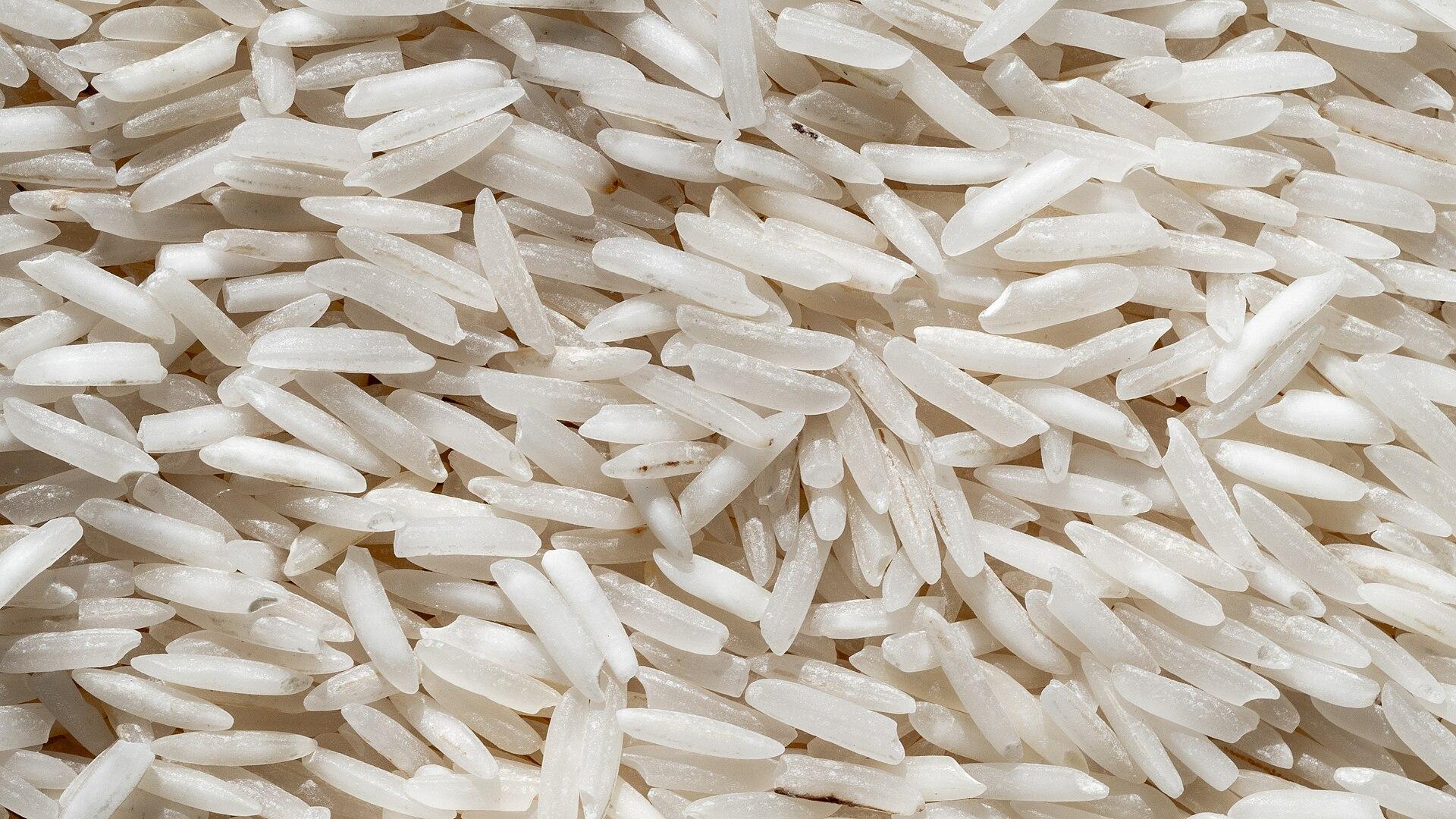
Short answer: 100 g of cooked white basmati rice has 120 to 130 calories. One cup, about 160 g, lands at 190 to 210. The same rice before cooking is a different number entirely: 100 g of dry basmati has 350 to 365 calories. Most of the confusion about rice calories comes from mixing those two numbers up.
Basmati is the rice behind biryani, pulao and daal chawal, so it shows up on Pakistani plates almost every day. It is also the rice people ask about most once they start counting calories, because the number on the packet never seems to match the number on the plate.
Why one rice has two calorie numbers
Dry rice is dense. A grain of basmati is mostly starch with a little protein, and it holds almost no water. Boiling changes that. The grains soak up water and swell to roughly three times their dry weight, and water adds weight without adding energy. That is why 100 g of dry rice becomes about 300 g of cooked rice, and why the calories per 100 g drop from the mid 300s to about 125.
The numbers below use USDA FoodData Central as the reference. USDA does not keep a separate entry for basmati, so the cooked values follow its entry for long grain white rice, cooked (FDC ID 168878): 130 kcal, 2.7 g protein, 28.2 g carbs and 0.3 g fat per 100 g. Basmati specific lab values land in the same range, 120 to 130 per 100 g cooked, with small differences by brand, origin and how much water the rice absorbed.
One practical point before the table. A cup is not a fixed weight. A loosely filled cup of cooked basmati weighs about 150 g. Packed down it can reach 180 g. That 30 g gap is worth about 40 calories, so if a cup is your unit, weigh it once and note what your cup holds.
Basmati rice calories and macros
| Food | Portion | Calories | Protein | Carbs | Fat |
|---|---|---|---|---|---|
| White basmati, dry | 100 g | 350 to 365 | 7 g | 77 to 80 g | 1 g |
| White basmati, cooked | 100 g | 120 to 130 | 2.7 g | 25 to 28 g | 0.3 g |
| White basmati, cooked | 1 cup (about 160 g) | 190 to 210 | 4 to 4.5 g | 40 to 46 g | 0.5 g |
| White basmati, cooked | 1 plate (about 250 g) | 300 to 325 | 7 g | 63 to 70 g | 1 g |
| Brown basmati, cooked | 100 g | 112 to 123 | 2.6 g | 23 to 26 g | 1 g |
| Brown basmati, cooked | 1 cup (about 195 g) | 215 to 240 | 5 g | 45 to 50 g | 2 g |
| White basmati, cooked with 1 tsp ghee | 1 cup | 235 to 255 | 4 g | 40 to 46 g | 5 to 6 g |
The dry row is the number printed on the packet, so read the label with care. If a bag says 360 kcal per 100 g, that is the dry grain. Cook it and the same 100 g of rice becomes roughly 300 g on the plate, still 360 kcal in total. Weighing cooked rice against the dry number is the single most common logging mistake with rice, and it triples the estimate.
White basmati vs brown basmati
Brown basmati keeps its bran layer, so it carries more fiber: about 1.5 to 1.8 g per 100 g cooked against about 0.4 g in white basmati. The calorie difference is small. USDA lists cooked brown long grain rice (FDC ID 169704) at 123 kcal per 100 g, and basmati specific values run 112 to 123. A cup of brown basmati weighs a little more than a cup of white because it absorbs less water, which is why the cup numbers above look close even though the per 100 g numbers favour brown slightly.
Brown basmati tastes nuttier and chewier, and it takes longer to cook. White basmati is softer, fluffier and what most Pakistani homes actually serve. The swap is worth making if you like the taste and want the extra fiber. It will not change your weight on its own, because the calories are nearly identical.
Basmati vs regular white rice
Calorie for calorie, there is no real difference. Cooked white basmati and cooked regular long grain white rice both sit around 120 to 130 kcal per 100 g. Basmati's edge is its glycaemic index. Published GI tables usually put basmati around 50 to 58, while regular long grain white rice sits around 64 to 72 and short grain rice higher still. Basmati carries more amylose, the starch that digests slowly, which is what keeps its GI down.
That does not make basmati a low calorie food, just a slower one. And the GI of a plate depends on what you eat with the rice, not the rice alone. A plate of basmati with daal and salad behaves very differently from the same rice eaten on its own.
What pushes the number up
Plain boiled basmati is the floor. Fat is what moves the number. A teaspoon of ghee stirred through a cup adds about 45 kcal. A tablespoon adds about 135. Dhaba and restaurant rice is often cooked with oil from the start, and a spoon of ghee on top is standard, so a restaurant plate of plain looking rice can easily run 100 to 150 kcal above the same amount at home.
Biryani and pulao are a different calculation again, because the rice is only part of the plate. The oil, meat and potatoes carry most of the extra calories. Our chicken biryani calories and chicken pulao calories posts break down full plates, and daal chawal calories covers the everyday pairing.
The honest way to log basmati rice
Weigh it dry if you can. It is the most reliable number in rice: 100 g dry is 350 to 365 kcal and cooks into about 300 g. If you weigh it cooked instead, multiply the grams by 1.25 for a quick estimate. A 250 g plate works out to about 310 kcal that way, which sits inside the 300 to 325 range in the table.
In CalsFlow, type:
"1 plate daal chawal, about 250 g rice, home cooked"
You get the estimate with the assumptions spelled out: rice weight, daal portion, any oil. Eating the restaurant version with ghee on top? Say so in the entry and watch the number move. Log the ghee as its own line and the estimate stops lying to you.
Is basmati rice good for weight loss?
It can be. The rice itself is not the problem. A cup of plain basmati with daal and salad is about 350 to 450 kcal and filling, which fits comfortably inside a deficit. Two heaped plates with ghee on top is a different meal, and the rice is only part of why. Portion is the lever that matters, along with what sits next to the rice. Pair it with something protein rich, keep the plate to one serving, and the rice works fine. For help setting a daily target, see how many calories should I eat per day, and for the practical side of logging desi meals, how to count calories in Pakistani food.
If you want the full picture across the foods that share a plate with basmati, the Pakistani food calorie chart puts roti, daal, karahi and biryani side by side.
FAQs
How many calories are in 1 cup of basmati rice? About 190 to 210 for a cup of plain cooked white basmati, about 160 g. Brown basmati is close, 215 to 240 for a slightly heavier cup.
How many calories in 100g of basmati rice? 120 to 130 cooked, 350 to 365 dry. The dry number is the one on the packet, so check which one you are reading before you log it.
Does basmati rice have fewer calories than regular rice? No, not in any meaningful way. Cooked white basmati and cooked regular long grain white rice both sit around 120 to 130 kcal per 100 g. Basmati's edge is its lower glycaemic index, not its calories.
Is brown basmati rice better than white basmati? Slightly more fiber and a few more nutrients, and roughly the same calories. If you like the taste and the chewier texture, it is a fine swap. It will not change your weight on its own.
How many calories are in 1 plate of basmati rice? A normal home plate, about 250 g of cooked rice, has 300 to 325 calories plain. Add a teaspoon of ghee and it is 345 to 370.
Cover photo: Ajay Suresh, Wikimedia Commons, CC BY 2.0.
CalsFlow provides nutrition estimates, not medical advice.