

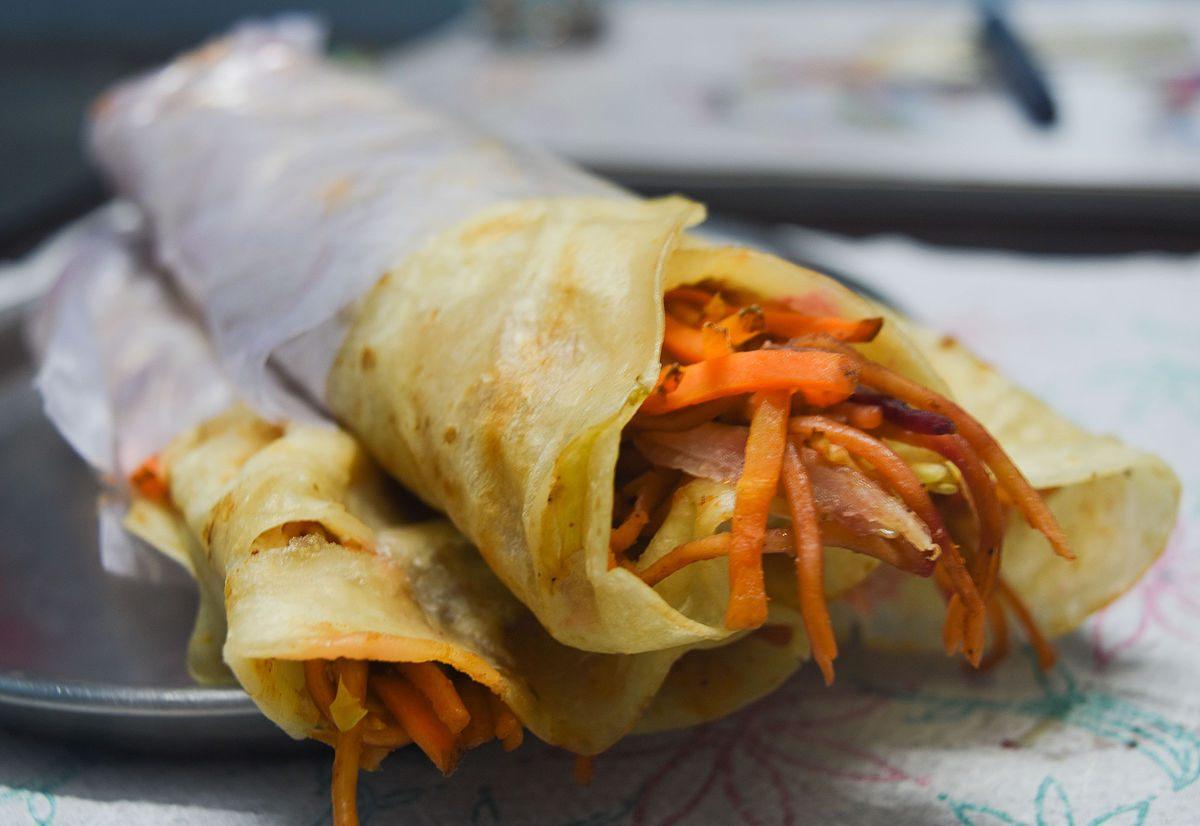
Short answer: one standard chicken paratha roll, about 280 g, runs 450 to 650 calories, and 100 g sits at 160 to 230 kcal. A lighter homemade roll with chutney instead of mayo lands below that range, while a dhaba roll loaded with extra mayo and cheese lands above it. The paratha itself is the biggest single contributor, the chicken brings the protein, and the sauce decides whether the roll is a reasonable meal or a heavy one.
The paratha roll is Karachi street food, born in the 1970s when a restaurant started rolling kebab inside paratha for a customer in a hurry. It spread from there to every city in Pakistan, and the formula barely changed: a flaky fried paratha, spiced chicken pieces, sliced onion, and a sauce, all rolled tight in paper. It is eaten one handed, on the go, which is exactly why its calories surprise people. A roll feels like a snack. It eats like a full meal.
What sets the number
The paratha. A fried paratha on its own runs roughly 250 to 350 kcal, depending on size, flour, and how much oil or ghee went into frying it. A maida paratha fried generously is at the top of that range. An atta paratha cooked with a measured spoon of oil sits lower. Either way, the bread is about half the roll's calories before anything goes inside it. This is why a roll made with two parathas, which some stalls offer as a "double" version, jumps so fast. You are adding a second fried flatbread to a meal that already has one.
The chicken. The filling is the best part of the roll nutritionally. Cooked chicken breast carries about 165 kcal per 100 g according to USDA FoodData Central, with roughly 31 g of protein. A roll usually holds 100 to 120 g of cooked chicken, so the filling alone contributes 170 to 220 kcal and most of the roll's protein. Tikka style chicken marinated in yogurt and spices is a little lighter than chicken cooked in a creamy sauce, but the difference is small compared with what the sauce and paratha do.
The sauce. This is where two identical looking rolls can differ by 150 kcal or more. A tablespoon of mayonnaise is about 90 to 100 kcal, and a roll rarely stops at one tablespoon. Green chutney, by contrast, is mostly herbs, chili, lemon and yogurt, and a tablespoon of it is only 10 to 20 kcal. Swapping mayo for chutney is the single easiest cut in the whole roll, and it costs nothing in flavour if you like chutney. Garlic mayo sits in the same range as regular mayo, so do not let the name fool you.
The extras. An egg spread on the paratha while it cooks, the Kolkata style touch, adds about 70 kcal and a few grams of protein. A slice of cheese adds roughly 100 kcal and a good amount of fat. Extra onion, tomato and cucumber add crunch and almost no calories, so they are the one addition that never hurts. Fries stuffed inside the roll, which some stalls do, add about 150 kcal for a small handful and turn the roll into something closer to a burger in a paratha.
Homemade versus restaurant. Home rolls are usually lighter for three reasons: the paratha is cooked with measured oil, the chicken portion is a known amount, and the sauce is spread with a spoon instead of squeezed from a bottle. Restaurant and dhaba rolls tend to be oilier, saucier, and bigger. The same roll can differ by 150 to 200 kcal between a home kitchen and a dhaba counter, and almost all of that gap is oil and mayo.
Chicken paratha roll calories and macros
| Food | Portion | Calories | Protein | Carbs | Fat |
|---|---|---|---|---|---|
| Chicken paratha roll, homemade, chutney | 1 roll, about 260 g | 380 to 500 | 26 to 32 g | 38 to 48 g | 15 to 22 g |
| Chicken paratha roll, standard restaurant | 1 roll, about 280 g | 450 to 650 | 25 to 35 g | 40 to 55 g | 18 to 30 g |
| Chicken paratha roll, with mayo | 1 roll, about 290 g | 550 to 750 | 25 to 35 g | 40 to 55 g | 27 to 40 g |
| Chicken paratha roll, with egg | 1 roll, about 310 g | 520 to 720 | 30 to 40 g | 40 to 55 g | 21 to 33 g |
| Chicken paratha roll, with cheese | 1 roll, about 300 g | 550 to 750 | 28 to 38 g | 40 to 55 g | 25 to 38 g |
| Chicken paratha roll | 100 g | 160 to 230 | 9 to 13 g | 14 to 19 g | 7 to 11 g |
| Mayonnaise | 1 tablespoon | 90 to 100 | 0 g | 0 g | 10 to 11 g |
| Green chutney | 1 tablespoon | 10 to 20 | 0 to 1 g | 2 to 3 g | 0 to 1 g |
A roll here means the paratha plus its filling and sauce, not the fries or cold drink that often come with it. A sugary drink on the side can add 140 kcal or more without changing how full you feel, so if you are tracking the meal, count the drink too.
Paratha roll versus shawarma
Against chicken shawarma, the paratha roll usually runs a little higher, and the bread is why. A shawarma wrap is often a thinner pita or saj bread, while a paratha is fried and layered, so it carries more fat before the filling even goes in. The fillings are similar, chicken, onion, sauce, so the gap between the two mostly comes down to the bread and how much mayo each vendor uses. If you love both, the lighter order in either case is the same: chutney or garlic sauce in moderation, extra salad, no cheese.
A lighter roll that still tastes like a roll
Keep the chicken and the chutney. Those are the parts that make it a paratha roll. Then change three things. Cook the paratha with one measured tablespoon of oil instead of frying it in a pool of it, or use a frozen paratha and cook it on a dry tawa with a light brush of oil. Ask for chutney instead of mayo, or half mayo and half chutney if you want the creaminess. Load up the onion and salad, and skip the cheese and the fries inside. Those three changes can pull a 650 kcal dhaba roll down toward 450 without touching the chicken or the spices. For more on the bread itself, see paratha calories, and for the chicken side of the equation, see chicken tikka calories.
How to track a chicken paratha roll in seconds
Describe it the way it looks when you unwrap it:
"1 chicken paratha roll with mayo + salad"
In CalsFlow, that gives you the calorie and macro estimate plus the assumptions behind it: the roll size it priced in, how much chicken it allowed for, and whether it counted a restaurant level of oil and mayo. Ate a homemade roll with chutney instead? Say so and the estimate moves with it. The same describe what you see approach sits at the heart of our guide to counting calories in Pakistani and desi food. After a few rolls logged this way, you will know whether your usual order is a 450 kcal lunch or a 750 kcal one, which is the only number that actually matters for your tracking.
FAQs
Is a chicken paratha roll good for weight loss?
It can fit, but it is not an easy weight loss food. It has real protein, real ingredients, and it keeps you full for hours, which all help. The problem is the same as with most street food: the calories are dense and easy to underestimate. A homemade roll with chutney and salad is a reasonable lunch. A large mayo loaded dhaba roll twice a week can quietly eat up a calorie deficit.
How many calories in 1 chicken paratha roll?
A standard restaurant roll of about 280 g runs 450 to 650 kcal. A lighter homemade roll runs roughly 380 to 500 kcal. A mayo heavy or cheese loaded roll can reach 750 kcal. If the roll came from a dhaba and looked glossy with oil and sauce, use the top of the range.
Does mayo or chutney change the calories much?
Yes, more than any other single swap. One tablespoon of mayo is about 90 to 100 kcal, while a tablespoon of green chutney is 10 to 20 kcal. A roll with two tablespoons of mayo carries roughly 160 kcal more than the same roll with chutney. If you keep everything else the same and only change the sauce, you have already made the biggest possible improvement.
Is a paratha roll healthier than a burger?
Usually, by a little. The chicken is grilled rather than fried in batter, and the roll has salad and chutney instead of a sugary bun and processed cheese. But a mayo loaded roll with cheese and fries inside closes that gap fast. Judge the roll in front of you, not the category it belongs to.
If you eat paratha rolls often, the habit that pays off is a small one: decide the sauce before you order, and be honest about the size. The chicken and the chutney will take care of the flavour. For a broader picture of where desi dishes sit, see the Pakistani food calorie chart, and if you want to check how much protein you actually need in a day, see how much protein you need per day.
Try logging your next paratha roll in CalsFlow and see where your usual order lands: CalsFlow on Google Play
Cover photo: Satyajit Dhawale (Satyajit888), CC BY-SA 4.0, via Wikimedia Commons.
CalsFlow provides nutrition estimates, not medical advice.