

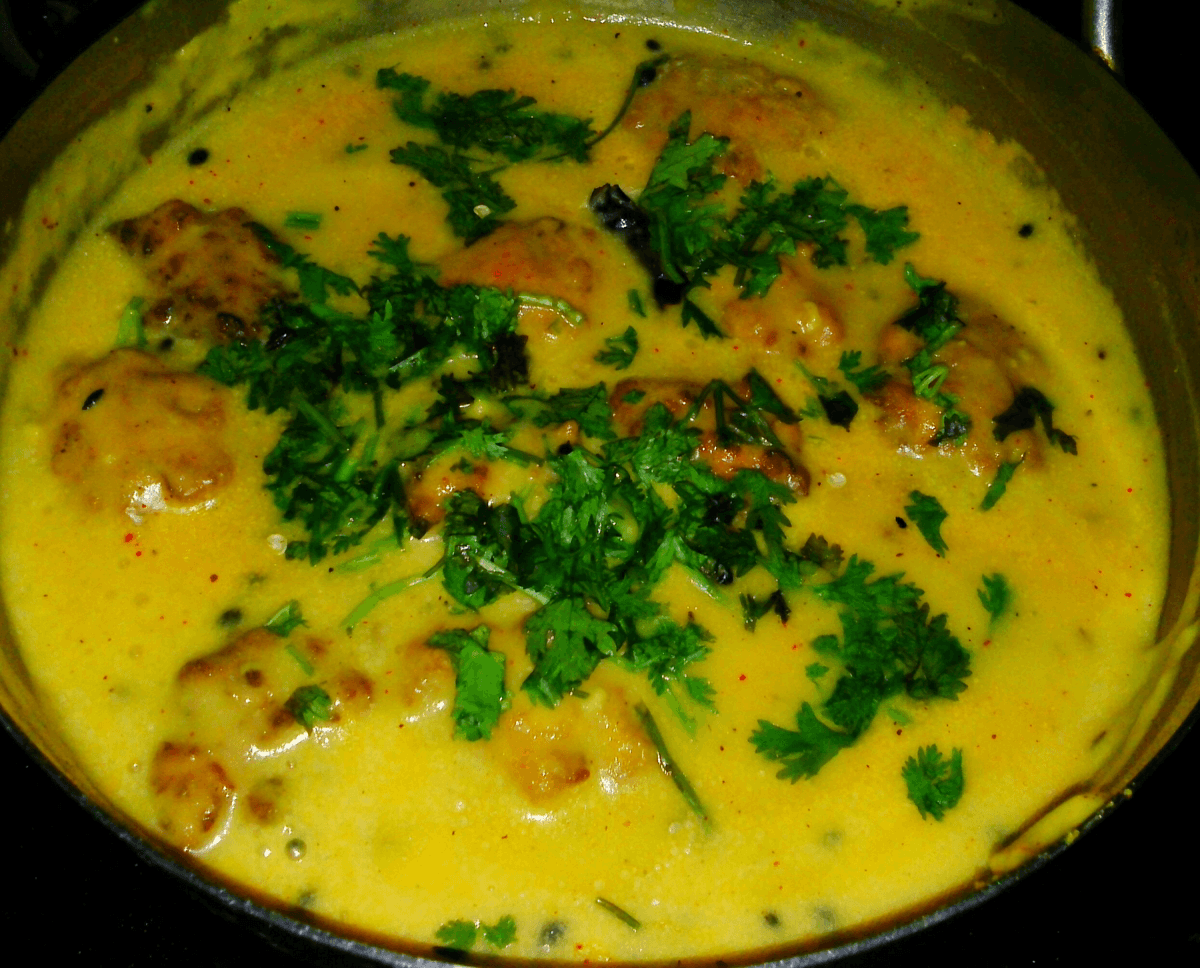
One cup of kadhi pakora carries 250 to 350 calories. The classic plate, kadhi chawal, a cup of kadhi with a cup of rice, lands around 450 to 550. The kadhi itself is light. The pakoras and the oil are what push the number up, and a heavy hand with either can move a bowl by 100 calories without changing how it looks.
Kadhi pakora is a weekday lunch in a lot of Pakistani homes. Yogurt whisked with besan, simmered low until it turns silky and yellow, pakoras dropped in to soak, finished with a tadka of oil, curry leaves, and dried red chillies. It is usually ladled over rice or scooped up with roti, and it is one of those dishes where every household swears their version is the right one. The one exception to watch for is Sindhi kadhi, which is a different dish altogether, tomato based with no yogurt, so the numbers below are for the yogurt and besan version.
| Portion | Calories | Protein | Carbs | Fat |
|---|---|---|---|---|
| 100 g kadhi pakora | 120 to 150 | 4 to 6 g | 10 to 14 g | 7 to 10 g |
| 1 cup, about 200 g | 250 to 350 | 9 to 13 g | 22 to 30 g | 14 to 20 g |
| 1 large bowl, about 300 g | 380 to 500 | 13 to 18 g | 32 to 44 g | 20 to 30 g |
| Kadhi chawal, 1 cup kadhi plus 1 cup rice | 450 to 550 | 13 to 17 g | 65 to 75 g | 14 to 21 g |
| Kadhi with 2 rotis instead of rice | 410 to 550 | 15 to 19 g | 50 to 60 g | 16 to 22 g |
These ranges come from published recipes and from the ingredients themselves, and the recipes agree more than the spread suggests. Tarla Dalal lists Punjabi pakoda kadhi at 276 calories per serving, Recipe52 puts a small bowl at 322, and Subbu's Kitchen lists 210 per cup, so a cup in the 250 to 350 range covers the honest middle. The ingredients explain why. Besan runs 387 calories per 100 grams dry, and plain whole milk yogurt about 61 per 100 grams, both from USDA FoodData Central. A pot of kadhi is mostly water and yogurt with only a few spoonfuls of besan, so the base is thin on calories. The density arrives with the pakoras, which are fried, and with the oil in the tadka.
Why one bowl is never like the next
Count the pakoras first. Each one adds roughly 30 to 50 calories, depending on size and how much oil it absorbed, so a bowl with two pakoras and a bowl with five are different meals even when the kadhi underneath is identical. Restaurants and dhabas tend to be generous with pakoras and with oil, which is why their bowls sit at the top of every range above. Home versions with fewer pakoras and a lighter tadka sit at the bottom.
The tadka matters more than people think. A single tablespoon of cooking oil is about 120 calories, and kadhi often gets two, one in the base and one for the tadka on top. That oil is doing real flavour work, the curry leaves and chillies bloom in it, but it is also the easiest place to shave calories. A home cook who measures the tadka instead of pouring freehand can cut 50 to 100 calories from the pot without anyone at the table noticing.
The yogurt sets the floor. Full fat dahi makes a richer kadhi, low fat dahi a lighter one, and the difference across a full cup is maybe 30 to 50 calories. It is real, but it is smaller than the pakora count or the oil, so fix those two before worrying about the yogurt.
Logging kadhi pakora in CalsFlow
Kadhi is a good example of a dish where the description does the work. Type in something like "1 cup kadhi pakora, 3 pakoras, with 1 cup rice". CalsFlow starts from a middle assumption, around 500 calories for that plate. Then adjust the two things that matter. More pakoras, move it up. A visibly oily tadka, move it up again. A thin homemade kadhi with two small pakoras and no rice, move it down toward 250. The estimate only goes wrong when the pakora count is guessed, so count them before they disappear into the curry.
For the rest of the plate, roti calories covers the two roti version, and pakora calories breaks down the fritters on their own, including what frying does to the numbers. The Pakistani food calorie chart puts kadhi next to daal and karahi for a quick comparison, and calorie counting Pakistani desi food has the practical method for dishes like this, where the recipe changes from house to house.
Is kadhi pakora good for weight loss
It can be, with one condition. The base is genuinely friendly, yogurt and besan bring protein and fibre for very few calories, and a cup on its own at 250 to 350 is a reasonable lunch. What breaks it is the pairing. A mountain of rice and a bowl fished full of pakoras can quietly reach 700 calories, and that is before a second helping. The fix is boring and it works: keep the kadhi, keep two or three pakoras, and cap the rice at a cup. A smaller rice portion with a full cup of kadhi still feels like a proper meal because the curry is the point, not the rice.
If you are working out how much you should be eating in a day, how many calories should I eat per day walks through it. Kadhi fits most plans easily when the rice is measured and the pakoras are counted, and it is a far better lunch than the fried options that usually sit next to it on a dhaba menu.
Frequently asked questions
How many calories are in kadhi pakora with rice? A cup of kadhi with a cup of rice is 450 to 550 calories. A larger bowl with more pakoras and a heaped plate of rice can reach 600 to 700.
Is kadhi healthy? The base is yogurt and chickpea flour, so it brings protein, fibre, and calcium without much fat of its own. The health question is really about the oil and the pakora count, which is where the fried part of the dish lives.
Does kadhi pakora have protein? Yes, about 9 to 13 grams per cup, mostly from the yogurt and the besan. It is not a high protein dish next to meat, but it is more protein than most vegetable curries, and daal calories is the closest comparison if you want to see how the lentil version stacks up.
How is Pakistani kadhi different from Sindhi kadhi? The Pakistani version is yogurt and besan based, yellow, tangy, and served with pakoras. Sindhi kadhi is tomato based with no yogurt, thinner, and usually served with rice and vegetables. Same name, different dish, different calories.
Having kadhi chawal for lunch? Describe it in CalsFlow: how many pakoras, how much rice, and whether the tadka looked oily. That is all it takes to get a number that matches the plate in front of you instead of a generic one that pretends every kadhi is the same.
Cover photo: Ams4wiki via Wikimedia Commons (CC BY-SA 4.0). CalsFlow provides nutrition estimates, not medical advice.