

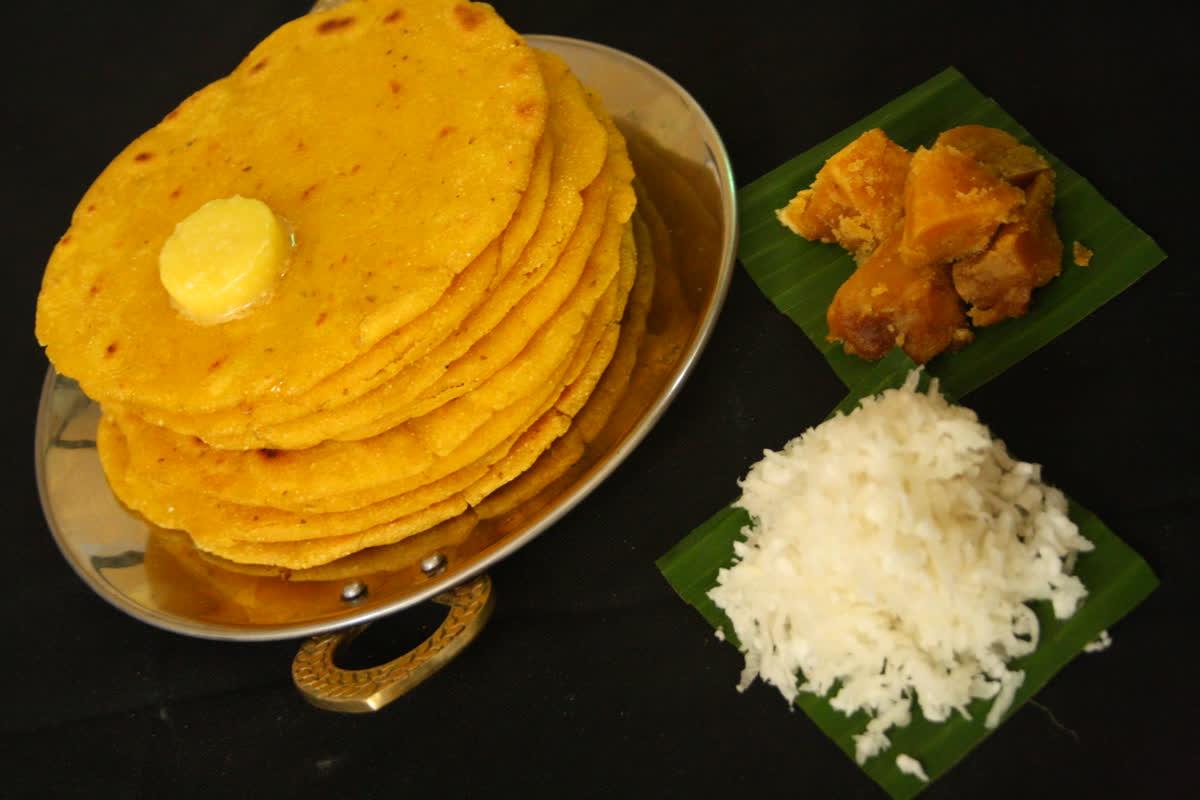
Short answer: one medium plain makki ki roti, about 6 inches across and made from roughly 30 g of makki ka atta, has 120 to 150 calories. Brush it with a teaspoon of butter or ghee and it climbs to 150 to 190. A big, thick dhaba roti fried in ghee can reach 190 to 230. The flour is only part of the story. Size and the fat on top decide where any single roti lands.
Makki ki roti, or makki di roti in Punjabi, is the cornmeal flatbread of Punjab. It shows up with the winter mustard greens, a dollop of white butter, and a piece of jaggery on the side. Most of the year it is a curiosity. In saag season it is the main event, and it is also the bread people ask about most when they start counting calories in winter.
Why one roti can vary by 100 calories
Makki atta does not behave like wheat atta. Wheat dough stretches and rolls thin. Maize flour has no gluten, so the dough is crumbly and gets patted into shape by hand. That means makki rotis come out thicker and smaller than wheat rotis, and thickness is hard to standardize. Two rotis from the same batch can differ by a third in weight.
The flour per roti. A medium roti uses about 30 g of dry makki ka atta. USDA FoodData Central lists whole grain yellow cornmeal at about 362 kcal per 100 g, so 30 g of flour carries roughly 110 kcal before cooking. A larger roti made from 40 g of flour starts at about 145 kcal. Weigh the flour once and you will know your own roti far better than any chart can tell you.
Butter, ghee, or makhan. This is where the numbers move. A teaspoon of butter adds about 35 kcal. A teaspoon of desi ghee adds about 45. A generous dollop of white makhan, the kind that melts into the hot roti the way it is meant to, can add 90 to 110. The photo at the top shows the classic serving: butter on the roti, jaggery beside it. That jaggery adds roughly 20 kcal a small piece, and grated coconut adds a little more, so the plate as photographed is heavier than a plain roti alone.
Cooking fat. Some cooks roast the roti dry on the tawa. Others fry it in a spoon of ghee. The fried version lands at the top of every range below.
Makki ki roti calories and macros
| Portion | Calories | Protein | Carbs | Fat |
|---|---|---|---|---|
| Makki ka atta, dry | 100 g | 362 | 8 g | 77 g |
| 1 medium roti, plain | 120 to 150 | 3 g | 25 g | 1 to 2 g |
| 1 medium roti, 1 tsp butter | 155 to 185 | 3 g | 25 g | 5 g |
| 1 medium roti, 1 tsp desi ghee | 165 to 195 | 3 g | 25 g | 6 g |
| 1 large roti, ghee fried | 190 to 230 | 4 to 5 g | 30 to 38 g | 5 to 9 g |
| 2 medium rotis, plain | 240 to 300 | 6 g | 50 g | 2 to 4 g |
| 2 rotis with a bowl of saag | 600 to 850 | 14 to 20 g | 75 to 100 g | 25 to 45 g |
The flour row uses USDA figures for whole grain yellow cornmeal, which is the closest standard entry to makki ka atta: about 362 kcal, 8 g protein, 77 g carbs and 7 g fiber per 100 g. The meal row matches the numbers in our sarson ka saag calories post, where the full plate with makhan lands between 600 and 850.
Makki roti vs wheat roti
A medium homemade wheat roti has about 100 to 130 calories (roti calories), so a makki roti runs a little heavier, roughly 20 to 30 kcal more. The flour is not the reason. Whole wheat flour and cornmeal are close in calories per 100 g. The difference is the roti itself: makki rotis are thicker, use a little more flour each, and almost always get butter on top.
Wheat has one edge on paper. Whole wheat flour carries about 13 g of protein per 100 g against cornmeal's 8 g, so a wheat roti gives you a gram or two more protein. Makki has its own edge. It is naturally gluten free, which matters for anyone who cannot eat wheat, and its coarse texture and fiber keep you full. Cornmeal brings about 7 g of fiber per 100 g, plus small amounts of iron, magnesium and phosphorus.
Neither one is a diet food or a problem food. The choice comes down to what you are eating it with and how much fat goes on top. A plain wheat roti with daal and a buttered makki roti with saag are two different meals, and the bread is the smaller part of the difference.
The honest way to log makki ki roti
Count rotis, then count the fat separately. "Two makki rotis" is not one number. Two plain rotis are about 240 to 300 kcal. Two rotis with a tablespoon of makhan each are closer to 400 to 500. Log the makhan as its own line and the estimate stops lying to you.
In CalsFlow, type:
"2 makki ki roti with sarson ka saag and 1 tbsp makhan"
You get the estimate with the assumptions spelled out: roti count, saag portion, butter amount. Eating the dhaba version where the roti is fried in ghee? Say so in the entry and watch the number move. Two weeks of logging your usual winter plate and you will know it by heart.
Is makki ki roti good for weight loss?
It can be. One plain roti with a bowl of saag is a filling, high fiber meal for around 300 to 400 kcal, which is reasonable for lunch or dinner. The trouble is never the roti. It is the second roti, the extra makhan, and the jaggery on the side, each of which adds calories without adding fullness. Keep it to one or two plain rotis, go light on the butter, and the meal works fine inside a deficit. For more on keeping desi meals inside a target, see how to count calories in Pakistani food.
FAQs
How many calories are in 1 makki ki roti? About 120 to 150 plain, 150 to 190 with a teaspoon of butter or ghee, and up to 230 for a large ghee fried one.
Is makki ki roti gluten free? Yes. Maize flour contains no gluten, so makki ki roti is naturally gluten free. Watch the cross contamination if you buy flour from a mill that also grinds wheat.
Does makki ki roti have more calories than a wheat roti? A little, yes. A medium wheat roti is about 100 to 130 kcal and a medium makki roti is about 120 to 150, mostly because makki rotis are thicker and usually buttered. The gap is small. The fat on top matters far more than the flour.
How many calories are in makki ki roti with butter? About 155 to 185 with one teaspoon of butter, and 200 to 260 with a full tablespoon of white makhan. A tablespoon of makhan alone adds close to 100 kcal.
Is makki ki roti healthy? The roti itself is a decent food: whole grain, good fiber, naturally gluten free, and filling. It is not a protein source, with only about 3 g per roti, so pair it with something protein rich. The health of the meal depends on the saag and the butter, not the bread.
Cover photo: Vsigamany, Wikimedia Commons, CC BY-SA 4.0.
CalsFlow provides nutrition estimates, not medical advice.