

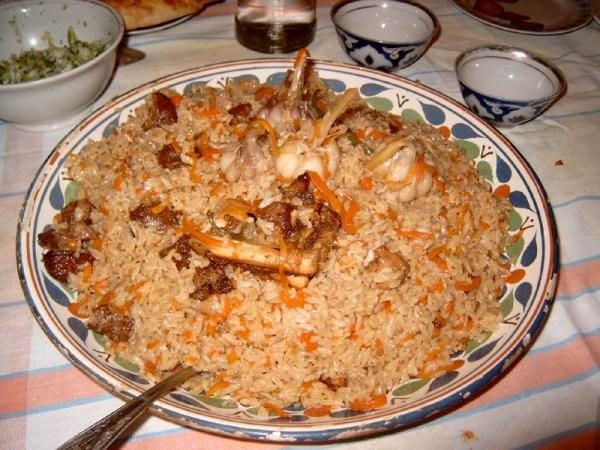
Short answer: one restaurant plate of mutton pulao, roughly 350 g, runs 600 to 800 calories, and 100 g sits at 180 to 230 kcal. A lighter homemade plate lands lower, a greasy degi plate lands higher. The rice does most of the work, the mutton adds protein and fat, and the oil used to fry the onions decides how far up the range you go.
Mutton pulao is not biryani with a different name. The rice cooks in yakhni, the stock made by simmering mutton with whole spices, so the flavour is in the grain itself rather than layered on top. Onions go in browned, the meat goes in tender, and the whole pot finishes fragrant and pale gold instead of fiery red. It shows up at daawats, on Eid, and at the dhaba next to the motorway, and the version on your plate can look very different depending on who cooked it.
What sets the number
The rice. Basmati is the base of the dish, and a plate of pulao is mostly rice by weight. Cooked white rice carries about 130 kcal per 100 g according to USDA data, before any oil or meat touches it. A generous plate is easily 250 g of rice alone, which already puts you past 300 kcal before counting a single piece of mutton.
The mutton. Mutton is richer than chicken. USDA figures put cooked lean lamb near 206 kcal per 100 g, and lean meat with its fat nearer 271 kcal per 100 g. Pulao meat usually sits somewhere between those two, since the pieces are bone in and carry some fat but are not pure fat. More meat on the plate means more protein, and also more fat. A plate with two small pieces is a different meal from a plate piled with four large ones.
The oil. This is the lever most people miss. The onions for pulao are fried until brown, and that frying oil stays in the pot. A home cook using two tablespoons of oil for a whole family pot adds only a little per serving. A dhaba cook who is generous with ghee can add a full tablespoon per plate without anyone noticing, and one tablespoon of oil or ghee is about 120 kcal on its own. If a plate tastes extra rich and glossy, that gloss is calories.
Yakhni versus masala pulao. A classic yakhni pulao is the lighter style. The flavour comes from stock and whole spices, not from a fried masala base. A masala pulao, where onions, tomatoes and ground spices are fried into a thick base before the rice goes in, usually carries more oil and lands at the top of every range here. Both are pulao. Only one is light.
Restaurant versus homemade. Home pulao is usually cooked with measured oil and a known amount of meat. Restaurant and degi pulao tend to be oilier, saltier, and served in larger plates. The same recipe can easily differ by 150 kcal a plate between a home kitchen and a restaurant kitchen, and that gap is almost entirely oil and portion size.
Mutton pulao calories and macros
| Food | Portion | Calories | Protein | Carbs | Fat |
|---|---|---|---|---|---|
| Mutton pulao, homemade | 100 g | 170 to 210 | 9 to 11 g | 24 to 28 g | 6 to 9 g |
| Mutton pulao, restaurant | 100 g | 200 to 240 | 9 to 12 g | 23 to 27 g | 9 to 13 g |
| Mutton pulao | 1 cup, about 200 g | 340 to 460 | 18 to 23 g | 47 to 55 g | 13 to 22 g |
| Mutton pulao, restaurant plate | About 350 g | 600 to 800 | 31 to 40 g | 82 to 96 g | 22 to 38 g |
| Mutton pulao, large oily plate | About 400 g | 700 to 900 | 35 to 45 g | 90 to 105 g | 30 to 45 g |
| Mint raita | 2 tablespoons | 20 to 35 | 1 to 2 g | 2 to 4 g | 1 to 2 g |
A plate here means the rice plus its mutton, not the extras on the side. Raita adds very little. A salad of onion, tomato and cucumber adds almost nothing and actually helps, since it fills part of the plate that rice would otherwise take. A second helping is where the count jumps. Pulao is easy to eat in large amounts because it is soft, fragrant and not spicy enough to slow you down, so the difference between one plate and one and a half plates is often 300 kcal nobody planned for.
Mutton pulao versus chicken pulao and mutton biryani
Against chicken pulao, mutton pulao runs higher per 100 g, and the reason is the meat. Chicken breast is lean, mutton is not, so swapping the meat while keeping the rice and oil the same adds roughly 30 to 50 kcal per 100 g. Against mutton biryani, the gap is smaller and less predictable. Biryani often has more oil, fried onions and sometimes cream or extra ghee layered in, so it usually lands higher, but a very oily pulao can match a modest biryani plate for plate. The cooking style matters more than the name on the menu.
A lighter plate that still tastes like pulao
Keep the yakhni. That stock is where the flavour lives, and it costs almost nothing. Then change three things. Measure the oil for the onions instead of pouring freely, and stop at two tablespoons for a family pot. Pick pieces with more meat and less visible fat, and trim what you can before cooking. Serve a normal plate, about one and a half cups, with raita and salad on the side instead of going back for a second full plate. Those three changes can pull a 750 kcal plate down toward 550 without touching the spices, the stock or the basmati.
How to track mutton pulao in seconds
Describe it the way it looks on the plate:
"1 plate restaurant mutton pulao + raita"
In CalsFlow, that gives you the calorie and macro estimate plus the assumptions behind it: the plate size it priced in, how much meat it allowed for, and whether it counted a restaurant level of oil. Ate a homemade plate, or a smaller one? Say so and the estimate moves with it. The same describe what you see approach sits at the heart of our guide to counting calories in Pakistani and desi food. After a few daawat plates logged this way, you will know whether your usual serving is a 550 kcal dinner or an 850 kcal one, which is the only number that actually matters for your tracking.
FAQs
Is mutton pulao good for weight loss?
It can fit, but it is not an easy weight loss food. It is filling, high in protein, and made from real ingredients, which all help. The problem is portion size and oil. A measured homemade plate with salad is a reasonable dinner. A large oily restaurant plate twice a week will quietly undo a calorie deficit, not because pulao is bad food, but because it is dense food eaten in large amounts.
How many calories in 1 plate of mutton pulao?
A restaurant plate of about 350 g runs 600 to 800 kcal. A smaller homemade plate of about 250 g runs roughly 430 to 530 kcal. If the plate came from a deg and looked glossy with oil, use the top of the range or above it.
Is pulao healthier than biryani?
Usually, yes, by a little. Yakhni pulao has less added fat than most biryanis, no layered fried onions on top, and no extra ghee brushed through it. The gap closes fast when pulao is cooked with a heavy hand on the oil, so a light biryani can beat a greasy pulao. Judge the plate in front of you, not the name of the dish.
Does removing the fat from the mutton help much?
Yes, more than most people expect. Visible fat is the densest part of the plate. Trimming it before cooking, or leaving the fattiest pieces on the side, can cut 50 to 100 kcal from a plate without changing the rice at all. The meat that remains is still rich in protein and still tastes like mutton.
If you eat mutton pulao often, the habit that pays off is a small one: decide the plate size before you serve yourself, and be honest about the oil. The stock and spices will take care of the flavour. For a broader picture of where desi dishes sit, see the Pakistani food calorie chart, and if you want to check how much protein you actually need in a day, see how much protein you need per day.
Try logging your next pulao plate in CalsFlow and see where your usual serving lands: CalsFlow on Google Play
Cover photo: Atilin, CC BY-SA 3.0, via Wikimedia Commons.
CalsFlow provides nutrition estimates, not medical advice.