

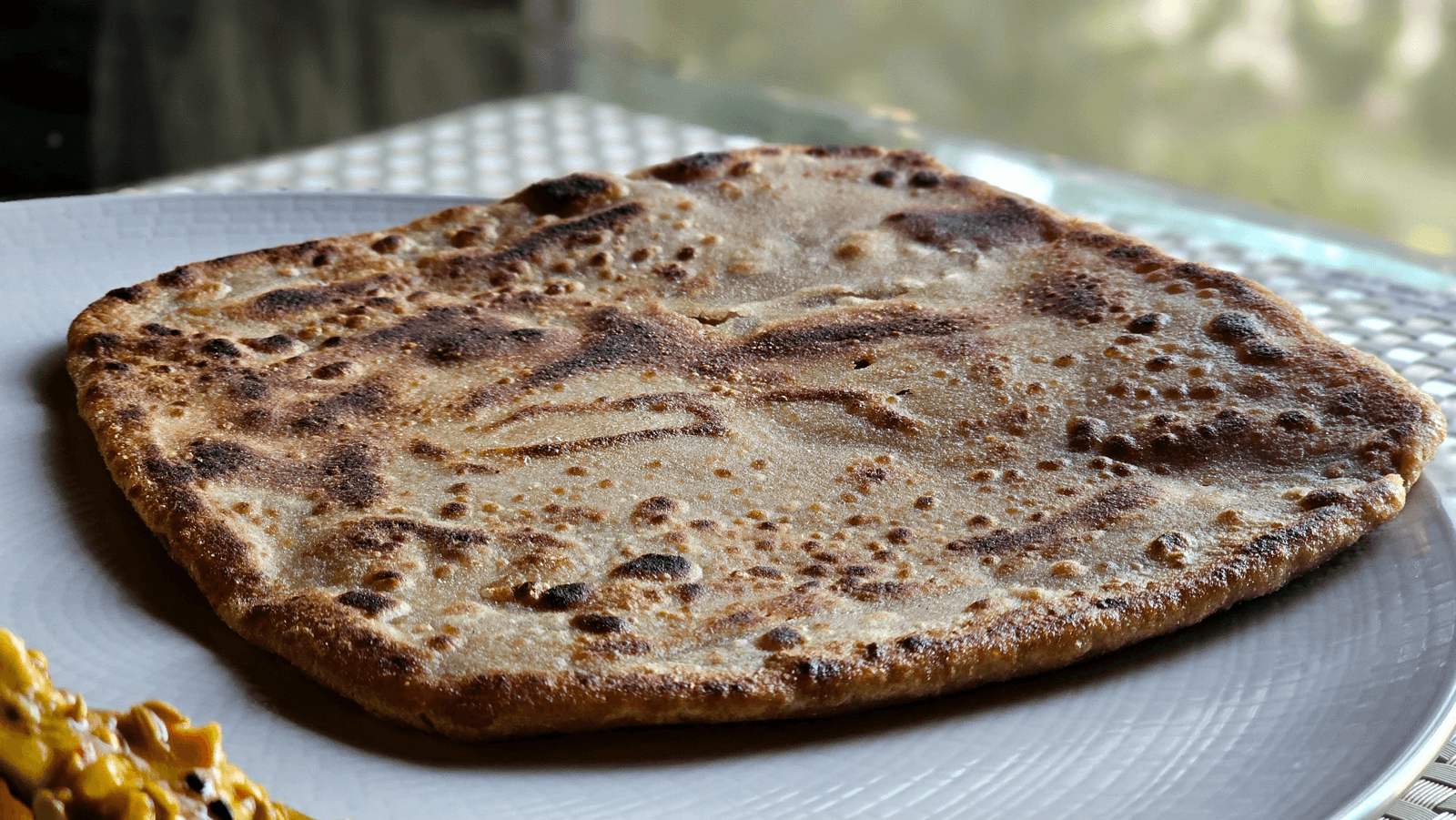
Short answer: one medium homemade keema paratha, around 150 grams with a beef qeema filling and a teaspoon of ghee on the tawa, carries about 400-480 calories. Per 100 grams, expect 270-320 kcal. A chicken keema version runs lighter at 340-420, and a dhaba one with butter melting on top can reach 550-700.
A keema paratha is a stuffed paratha, and the stuffing changes everything. A plain paratha is mostly dough and fat. An aloo paratha swaps some of that dough for potato, which is light. A keema paratha swaps it for spiced minced meat, which brings real protein and real fat in the same bite. That is why it is the most filling paratha on the breakfast table and also the heaviest.
Keema paratha calories and macros
| Version | Portion | Calories | Protein | Carbs | Fat |
|---|---|---|---|---|---|
| Homemade, beef keema, light ghee (1 tsp) | 1 medium (~150 g) | 400-480 | 18-22 g | 40-46 g | 16-21 g |
| Homemade, chicken keema, light ghee | 1 medium (~150 g) | 340-420 | 20-24 g | 40-46 g | 10-15 g |
| Homemade, beef keema, generous ghee (2 tsp) | 1 medium (~150 g) | 470-550 | 18-22 g | 40-46 g | 22-28 g |
| Dhaba / restaurant, butter on top | 1 large (~190 g) | 550-700 | 22-26 g | 52-60 g | 28-38 g |
| Average | 100 g | 270-320 | 12-15 g | 27-31 g | 11-14 g |
Build it from the parts and the numbers line up. Roughly 55 g of whole wheat atta is about 200 kcal, since whole wheat flour runs about 370 kcal per 100 g, per USDA FoodData Central. Seventy grams of cooked beef keema adds about 170 kcal: raw 80/20 ground beef is 254 kcal per 100 g with about 17 g of protein and 20 g of fat, and cooking drives off some water and fat, leaving cooked crumbles around 244-272 kcal per 100 g, per USDA FoodData Central. One teaspoon of ghee adds about 45. Total: just over 400, right in the middle of the table.
Chicken keema changes the picture in a useful way. Minced chicken is leaner than beef mince, so the same 70 g of filling costs roughly 110 kcal instead of 170, and the protein stays the same or climbs a little. That is the whole reason the chicken column sits 60-80 calories lower. If you make keema parathas at home and want them lighter without shrinking them, switching the meat is the single biggest lever you have.
What pushes the number up or down
The meat matters first. Beef qeema from the butcher is usually fattier than the 80/20 ground beef in the USDA tables, because Pakistani butchers often mince with extra fat for flavour. A rich butcher's mince can add 50-80 calories to a paratha over lean mince. Mutton keema lands in the same range as beef, sometimes higher. Chicken keema is the lightest of the three, and it is also the one most people under-season, so it tastes thinner. Extra green chillies, ginger and garam masala cost nothing in calories and fix that.
The ghee matters second. One teaspoon on the tawa is about 45 calories. Two teaspoons is 90. A dhaba cook does not measure, and the paratha also soaks up fat from the tawa as it crisps. Then a knob of white butter goes on top while it is still hot. That butter alone is another 35-50 calories. Two dhaba keema parathas with butter and a sweet lassi can cross 1,400 calories before the day has properly started.
The size matters third, and it is the one people misjudge most. A homemade keema paratha is usually 140-160 g. A dhaba one is 180-200 g, because the dough ball is bigger and the filling is more generous. Bigger sounds better, and it is, but the calories scale with it. If you eat out, count the dhaba number, not the homemade one.
One detail worth knowing: the filling has to be dry. A wet keema tears the dough and soaks it, so good cooks cook the qeema completely dry before stuffing. That dryness is also what keeps the paratha from turning greasy. A paratha that leaks oil onto the plate was fried in too much of it, and the calories leaked with it.
How to track it in seconds
In CalsFlow, type:
"1 homemade keema paratha, beef, medium, light ghee, plus half a cup of dahi"
You get the calorie and macro estimate plus the assumptions behind it: the piece weight it guessed, the meat it assumed, the ghee allowance. If your qeema was chicken instead of beef, say so and the number drops by about 60-80. If the dhaba added butter on top, say that too. For the full playbook, our guide to counting calories in Pakistani and desi food covers the same honest-entry approach across the whole cuisine, and the Pakistani food calorie chart lines this up against everything else on the breakfast table.
Making keema paratha work in a diet
Nothing about a keema paratha is off limits, and it has one real advantage over its cousins: protein. At 18-22 g per piece, a beef keema paratha carries roughly three times the protein of an aloo paratha and about double a plain paratha. Protein keeps you full, which is why one keema paratha often satisfies where two plain parathas leave you hungry again in an hour. If breakfast is your one shot at a filling meal, that matters.
What actually changes the number: use chicken keema or lean beef mince, measure your ghee for one week so you know what your spoon really adds, and keep the butter-on-top ritual for weekends. Pair it with dahi rather than lassi: a cup of plain dahi adds 5-7 g of protein for about 100 calories, while a sweet lassi can add 200-300 on its own. And if you love the dhaba version, eat one instead of two and let the protein do the work of keeping you full.
One more thing worth knowing: leftover keema makes a better paratha than fresh keema. A day in the fridge lets the spices settle and the fat set, so the filling stays dry and the paratha seals cleanly. Cook a batch of qeema once, and you have two days of parathas from the same pot. Our qeema calories page breaks down the filling on its own if you want to plan the batch.
FAQs
How many calories are in 1 keema paratha? About 400-480 kcal for a medium homemade beef keema paratha (~150 g) cooked with a teaspoon of ghee. A chicken keema version runs 340-420, and a large dhaba paratha with butter on top runs 550-700.
How many calories are in 2 keema parathas? Roughly 800-960 kcal for two medium homemade beef ones with light ghee, up to 1,100-1,400 for two dhaba parathas with butter.
How many calories are in 100 g of keema paratha? About 270-320 kcal per 100 g for typical homemade versions, rising past 350 per 100 g in ghee-heavy dhaba versions.
How much protein is in a keema paratha? Around 18-22 g in a medium homemade beef one, 20-24 g with chicken keema. That is the highest protein of any stuffed paratha, and the main reason it keeps you full longer than an aloo or plain paratha.
Is keema paratha good for weight loss? It can fit. The protein and the whole wheat fibre keep you full for hours, which is half the battle. Keep the ghee to one measured teaspoon, stick to one paratha, pick chicken keema or lean mince, and let dahi provide the side. The version that breaks diets is the dhaba double with butter, eaten on autopilot.
Beef or chicken keema, which is better? Chicken keema is lighter by about 60-80 calories per paratha with equal or slightly higher protein. Beef keema tastes richer and is the traditional choice. If you eat keema parathas often, chicken is the easier everyday pick; save beef for the weekend batch.
Want your keema paratha counted the way you actually made it? Describe it in CalsFlow with your meat, size and ghee, and it estimates the range honestly. Knowing whether yours lands at 380 or 620 is the difference between a plan and a guess.
CalsFlow provides nutrition estimates, not medical advice.
Cover photo: Paratha photo via Pexels.