

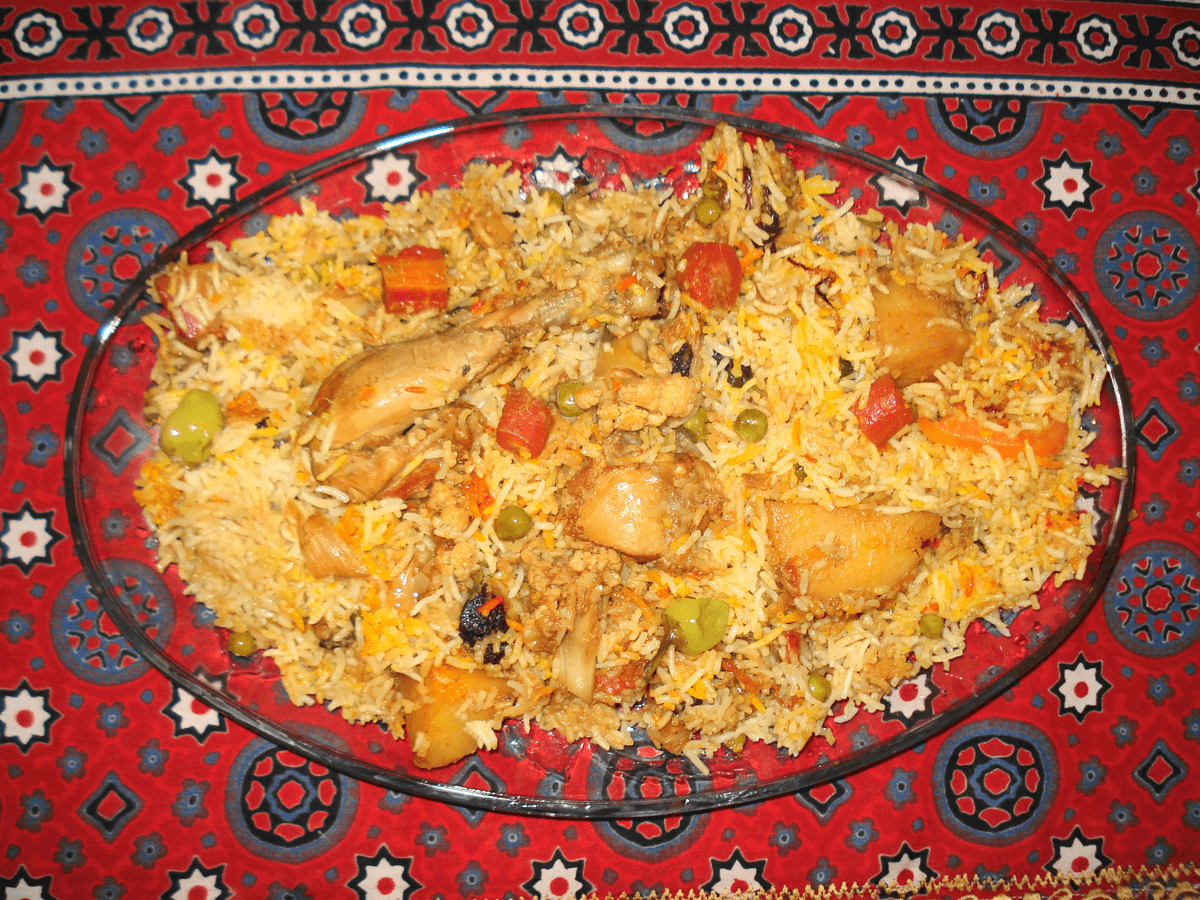
Short answer: a standard home plate of chicken Sindhi biryani, about 300 g, has 550 to 650 calories. A restaurant plate runs bigger and oilier, usually 350 to 400 g, and lands at 700 to 850. A single cup is 350 to 420. The dish is heavier than regular chicken biryani, and the reason is sitting right on top of the rice: fried potatoes, extra oil, and a rich tomato yogurt masala.
Sindhi biryani comes from Sindh, and in Karachi it is the default biryani. The rice is the same basmati you know, layered with chicken or mutton, but the masala is sharper and tangier than the version most people picture. Whole green chillies go in uncut. Dried plums, aloo bukhara, add a sour note. Tomatoes and yogurt make the masala wet and deep red. And potatoes, always potatoes, fried first and tucked into the layers. A plate without aloo is not really Sindhi biryani, and the aloo is part of why the calories climb.
Sindhi biryani calories and macros
| Portion | Calories | Protein | Carbs | Fat |
|---|---|---|---|---|
| 100 g | 180 to 210 | 8 to 10 g | 22 to 26 g | 7 to 9 g |
| 1 cup, about 200 g | 350 to 420 | 15 to 20 g | 44 to 52 g | 14 to 18 g |
| 1 home plate, about 300 g | 550 to 650 | 25 to 35 g | 65 to 80 g | 20 to 28 g |
| 1 restaurant plate, 350 to 400 g | 700 to 850 | 30 to 40 g | 80 to 100 g | 28 to 38 g |
| 1 home plate, mutton, about 300 g | 600 to 750 | 25 to 35 g | 65 to 80 g | 28 to 38 g |
| Raita, small bowl | 40 to 70 | 2 to 3 g | 4 to 6 g | 2 to 4 g |
The numbers are built from the parts. Cooked basmati runs about 130 kcal per 100 g according to USDA FoodData Central. Chicken is around 165 kcal per 100 g cooked. A fried potato piece adds 60 to 80 kcal where a boiled one would add half that. Oil is the swing factor: a single tablespoon carries about 120 kcal, and a degchi made for a crowd can absorb several. Add the pieces together and a 300 g plate lands where the table says. Published recipe estimates line up with this too, mostly between 500 and 730 kcal a serving depending on portion size.
Why one plate can vary by 300 calories
The oil. This is the biggest lever. A home cook who measures two tablespoons of oil for a whole pot gets a lighter biryani than a dhaba that fries the onions, the potatoes, and the masala in a generous pour. You cannot see the oil once the rice is layered, but it is there.
The potatoes. Two small aloo pieces add roughly 100 to 150 kcal. Some places serve three or four, and the big ones soak up oil while they fry. If you skip the potato, you drop a real chunk of calories. Nobody wants to hear that, but it is true.
The meat. Chicken keeps the plate lighter. Mutton adds fat with every bite, which is why the mutton row runs about 100 kcal higher. Beef sits between the two. The number of meat pieces matters too. A plate with one small chicken piece is a different meal from a plate loaded with two legs.
The portion. Biryani portions are not standard. A home serving is often a heaped plate of 300 g. A restaurant deg or takeaway box can push 400 g or more, and the extra 100 g is mostly rice and oil, adding 180 to 210 kcal on its own. Weigh your plate once and the guesswork mostly disappears.
The raita and salad. Raita is the kindest part of the meal. A small bowl of plain yogurt raita adds 40 to 70 kcal and genuinely helps with the heat. Salad adds almost nothing. The kachumber on the side is free calories in the good sense.
Sindhi biryani vs regular chicken biryani
A plain chicken biryani plate of the same weight runs about 500 to 600 kcal (chicken biryani calories). Sindhi biryani is roughly 50 to 100 kcal heavier per plate, and the gap comes from the potatoes and the richer masala, not the rice. The rice is the same. The spice level is higher, which fools some people into thinking the dish is lighter. Heat does not burn calories off the plate.
Compared with other rice dishes in the same family, Sindhi biryani sits above chicken pulao and mutton pulao per plate, because pulao skips the fried potatoes and the heavy layering. It is still well below a plate of beef biryani with extra oil, which can push past 800.
The honest way to log Sindhi biryani
Count the plate, then count the extras separately. "Sindhi biryani" is not one number. A home plate is 550 to 650. The same plate with three aloo pieces and a second helping of rice is a different entry.
In CalsFlow, type:
"1 plate chicken Sindhi biryani with 2 potato pieces and raita"
You get the estimate with the assumptions spelled out: plate size, potato count, meat type. Eating the restaurant version with extra oil? Say so in the entry and watch the number move. Two weeks of logging your usual Friday biryani and you will know it by heart.
Is Sindhi biryani good for weight loss?
It can fit, but the portion does the work. A cup of home Sindhi biryani with raita and salad is a satisfying lunch for 400 to 500 kcal, with 15 to 20 g of protein. A full restaurant plate with extra rice is 700 to 850, which is most of a lunch budget in one dish.
Three things keep it inside a deficit. Eat one plate, not one plate plus a top up. Ask for the aloo on the side if you are counting, or take one piece instead of three. And pick chicken over mutton when you have the choice. None of this needs a special diet version of the dish. The regular recipe, eaten in a normal portion, works fine. For more on keeping desi meals inside a target, see how to count calories in Pakistani food, and the Pakistani food calorie chart puts biryani next to everything else on the table.
FAQs
How many calories are in 1 cup of Sindhi biryani?
About 350 to 420, for a cup of roughly 200 g with chicken and one potato piece. A cup packed with extra potatoes or oil can reach 450.
Does Sindhi biryani have more calories than regular biryani?
Yes, usually 50 to 100 more per plate of the same weight. The fried potatoes and the richer tomato yogurt masala add calories that plain biryani does not have.
How many calories are in Sindhi biryani with raita?
A home plate with a small bowl of raita is 600 to 720 in total. Raita is the lightest part of the meal. The dahi calories post breaks down plain yogurt if you make your own.
The thing to remember about Sindhi biryani is that it is not a mystery food. Rice, chicken, potato, oil. You know every ingredient. Once you know the plate size and the oil, the calories stop being a guess. Log it once properly and the next ten plates take care of themselves.
Try logging your next plate in CalsFlow. Describe it the way it was served, potatoes and all, and adjust the portion until the number matches what is actually in front of you.
Cover photo: Miansari66, Wikimedia Commons, public domain.
CalsFlow provides nutrition estimates, not medical advice.